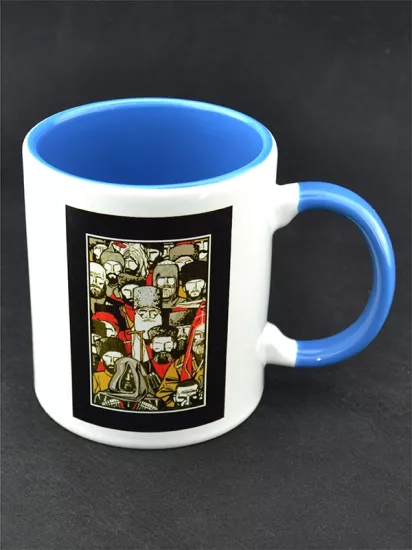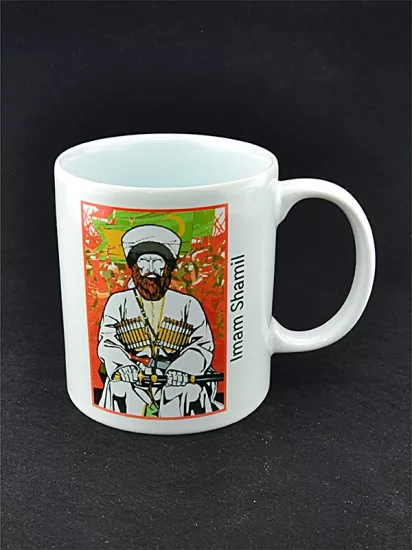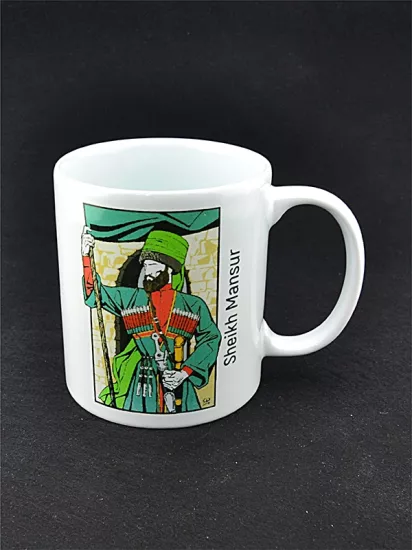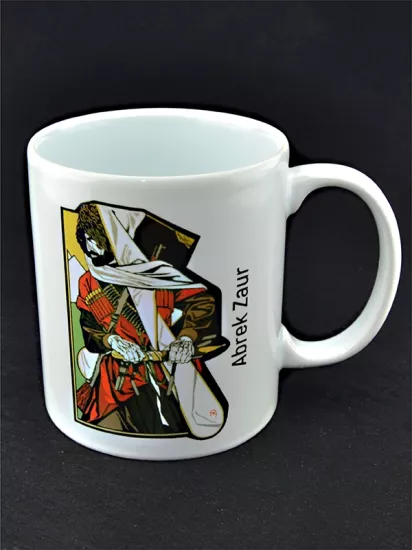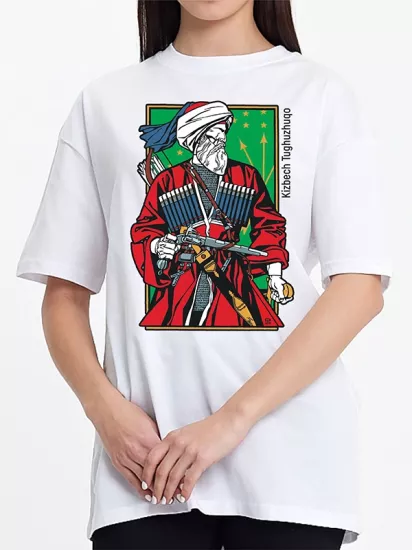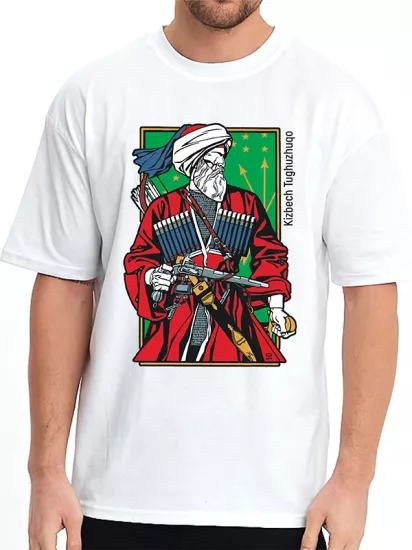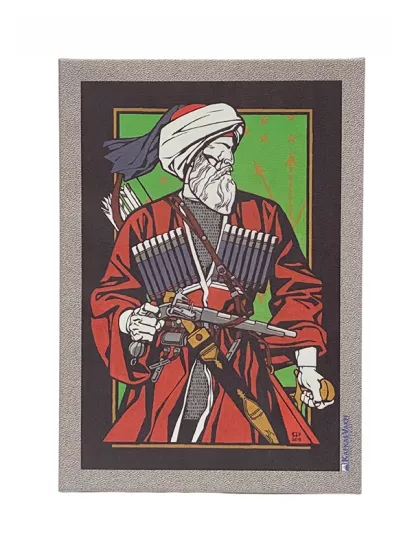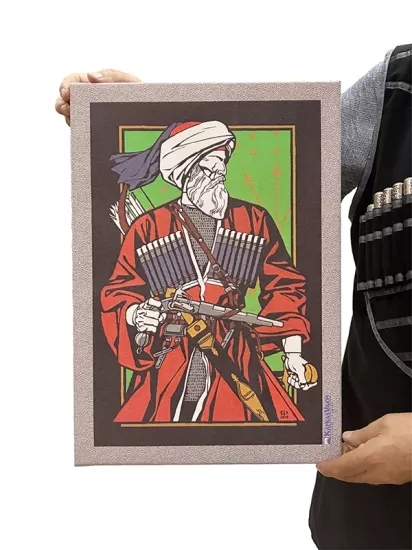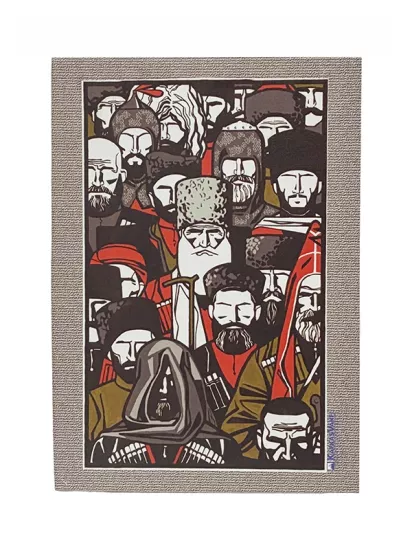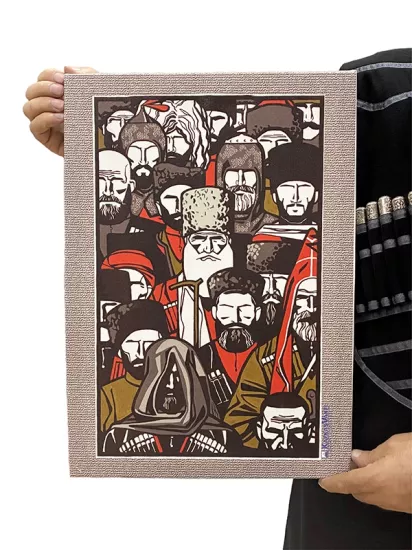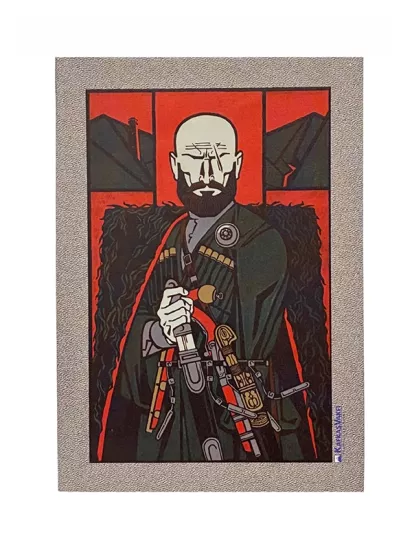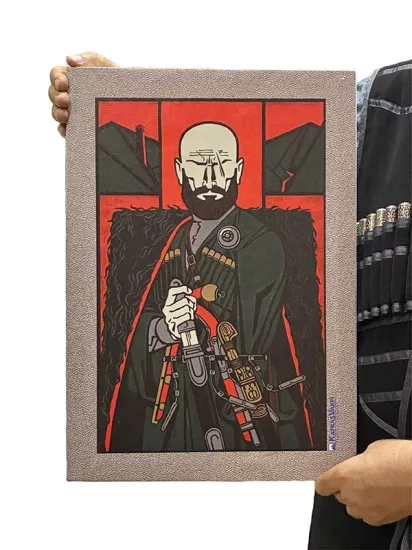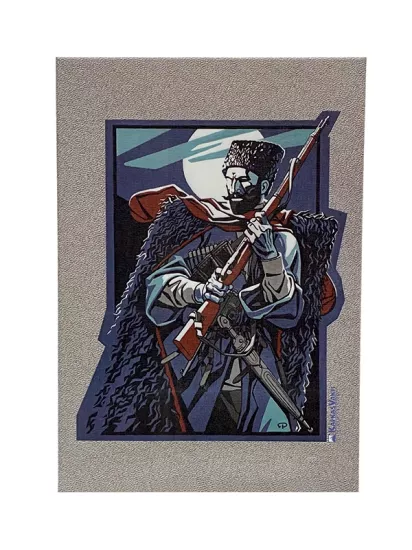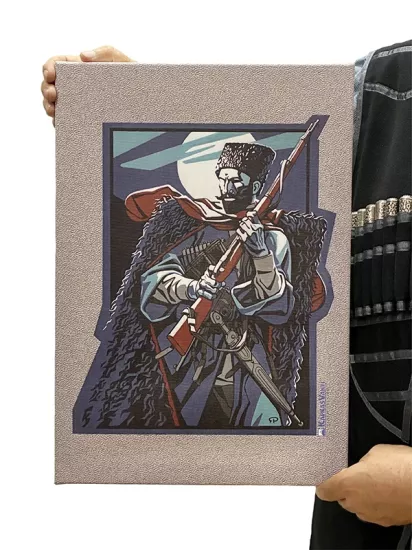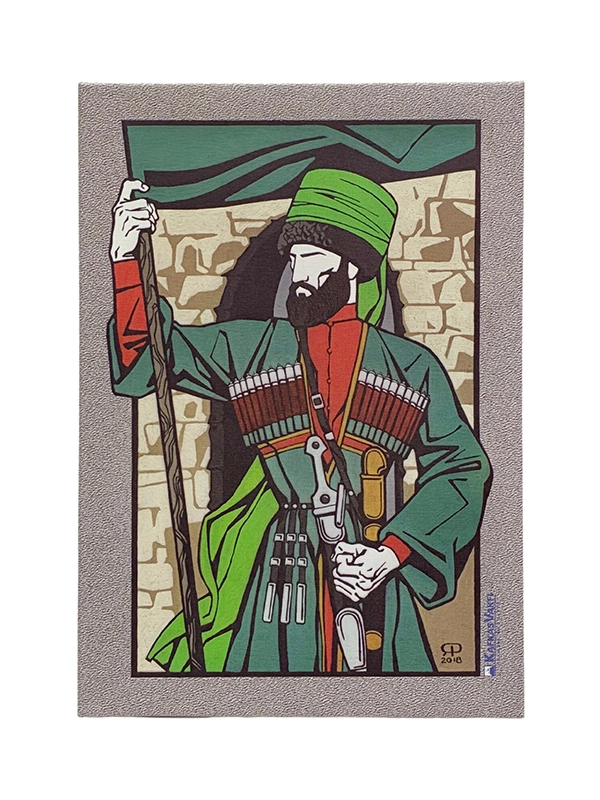
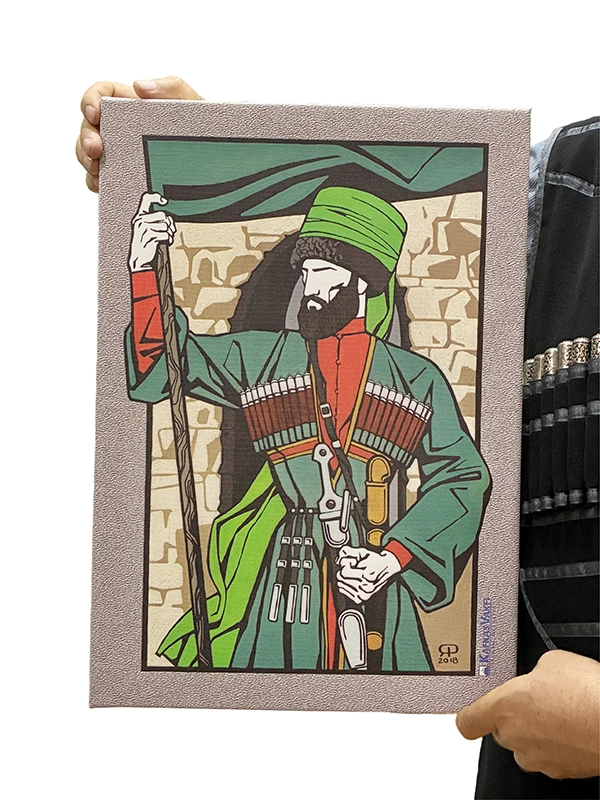
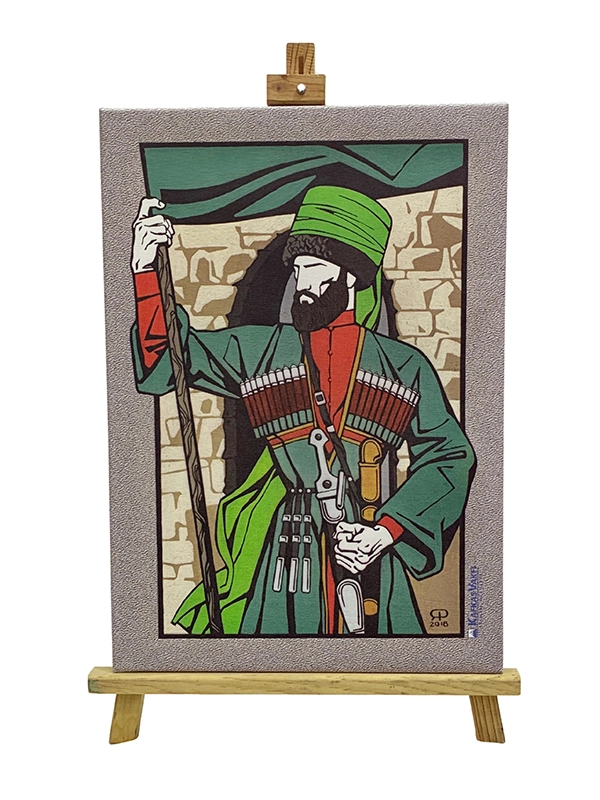
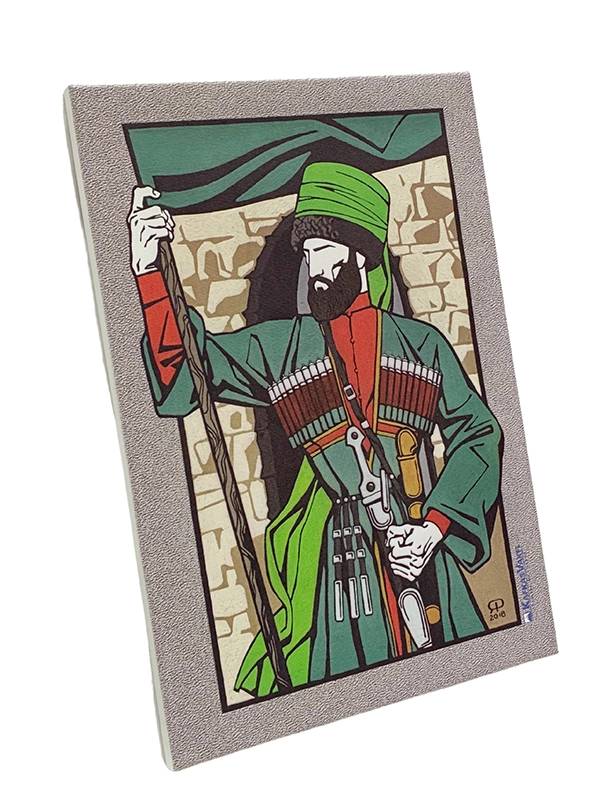
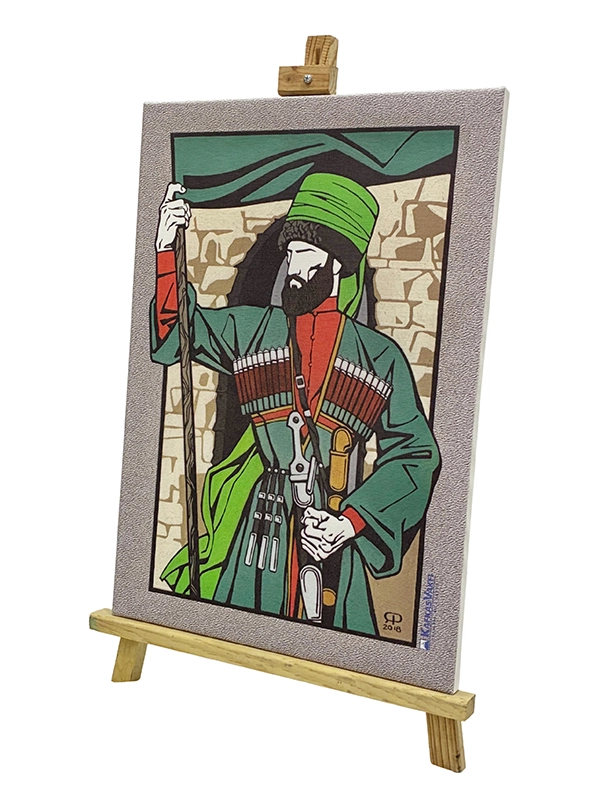
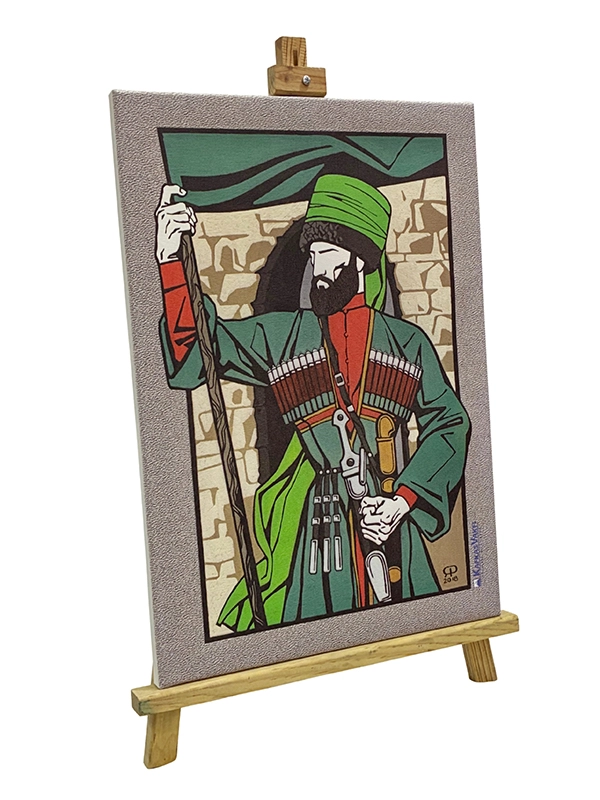
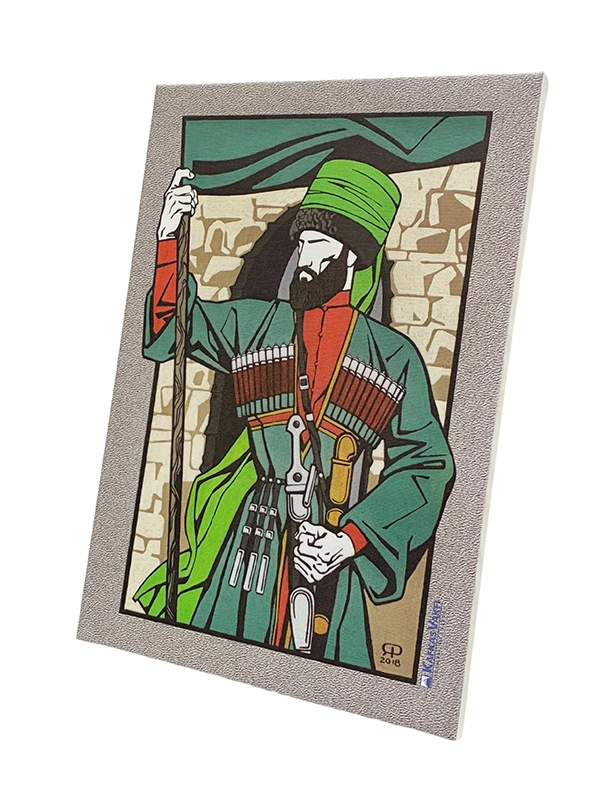
Bring the historical and spiritual portrait of the legendary Caucasian leader Sheikh Mansur into your home with this specially designed licensed canvas painting. This piece, created with the official license of the Caucasian Foundation and the original drawings of Chechen artist Rustem Yakhikhanov, is both an aesthetic decoration and a profound historical memorial object. The painting is produced using high-quality printing techniques, notable for its vibrant colors and details.
Product Technical Details:
Dimensions: 35 cm x 50 cm
Printing Technique: High-resolution, quality canvas print
Stretcher: Natural wood stretcher (inner frame)
Edge (Canvas Margin): 1.5 cm edge (the canvas wraps around the stretcher, creating a 1.5 cm margin on the sides)
License: Official Caucasian Foundation Licensed Product
Cleaning: Wipe with a slightly damp cloth. Do not use chemical cleaners.
Important Note: The easel shown in the photos is not included with the product.
Copyright: The graphics and design on the canvas painting belong to Chechen artist Rustem Yakhikhanov. Unauthorized copying, reproduction, and use is illegal.
Sheikh Mansur, the military, religious, and political leader of the Caucasian mountaineers in the late 18th century, was the first Imam of the Caucasus. He was born in 1760 in the village of Aldy.
Mansur was one of the first to understand that the Caucasian peoples needed to unite in their struggle for independence. He secured the alliance of the Chechens from the Assa River to Aksai and Aktash, that is, from the peaks of the main Caucasus mountain range to the Terek River. Sheikh Mansur set a difficult but noble goal: to unite all the mountain peoples of the Caucasus into a single state under the principles of Islam, under the "Sharia of the Prophet." By the end of 1785, many units began to gather, forming an army that reached ten thousand people. From 1785 to 1791, Sheikh Mansur led the uprising of many mountaineers against the Tsarist forces. This was the first mass armed uprising of the North Caucasian peoples against the Tsarist regime and was of great historical importance.
In 1791, exhausted from a wound, Mansur was captured during the attack by Tsarist troops on the Turkish fortress of Anapa (1787-1791 Russo-Turkish War). On the personal instruction of the Russian Empress Catherine the Great, Sheikh Mansur was transferred to St. Petersburg and then imprisoned in the Shlisselburg fortress. Here he became seriously ill and died on April 13, 1794.
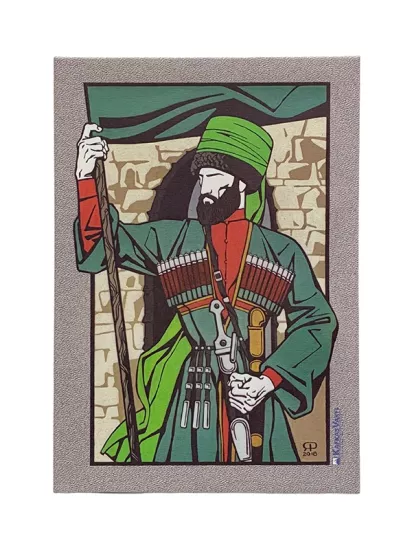
Bring the historical and spiritual portrait of the legendary Caucasian leader Sheikh Mansur into your home with this specially designed licensed canvas painting. This piece, created with the official license of the Caucasian Foundation and the original drawings of Chechen artist Rustem Yakhikhanov, is both an aesthetic decoration and a profound historical memorial object. The painting is produced using high-quality printing techniques, notable for its vibrant colors and details.
Product Technical Details:
Dimensions: 35 cm x 50 cm
Printing Technique: High-resolution, quality canvas print
Stretcher: Natural wood stretcher (inner frame)
Edge (Canvas Margin): 1.5 cm edge (the canvas wraps around the stretcher, creating a 1.5 cm margin on the sides)
License: Official Caucasian Foundation Licensed Product
Cleaning: Wipe with a slightly damp cloth. Do not use chemical cleaners.
Important Note: The easel shown in the photos is not included with the product.
Copyright: The graphics and design on the canvas painting belong to Chechen artist Rustem Yakhikhanov. Unauthorized copying, reproduction, and use is illegal.
Sheikh Mansur, the military, religious, and political leader of the Caucasian mountaineers in the late 18th century, was the first Imam of the Caucasus. He was born in 1760 in the village of Aldy.
Mansur was one of the first to understand that the Caucasian peoples needed to unite in their struggle for independence. He secured the alliance of the Chechens from the Assa River to Aksai and Aktash, that is, from the peaks of the main Caucasus mountain range to the Terek River. Sheikh Mansur set a difficult but noble goal: to unite all the mountain peoples of the Caucasus into a single state under the principles of Islam, under the "Sharia of the Prophet." By the end of 1785, many units began to gather, forming an army that reached ten thousand people. From 1785 to 1791, Sheikh Mansur led the uprising of many mountaineers against the Tsarist forces. This was the first mass armed uprising of the North Caucasian peoples against the Tsarist regime and was of great historical importance.
In 1791, exhausted from a wound, Mansur was captured during the attack by Tsarist troops on the Turkish fortress of Anapa (1787-1791 Russo-Turkish War). On the personal instruction of the Russian Empress Catherine the Great, Sheikh Mansur was transferred to St. Petersburg and then imprisoned in the Shlisselburg fortress. Here he became seriously ill and died on April 13, 1794.


 0212 671 79 80
 Türkçe
 English
 русский