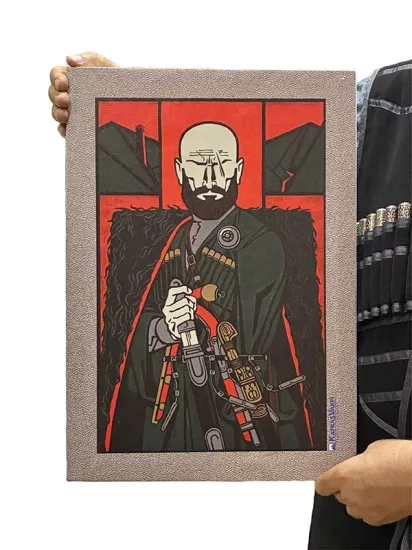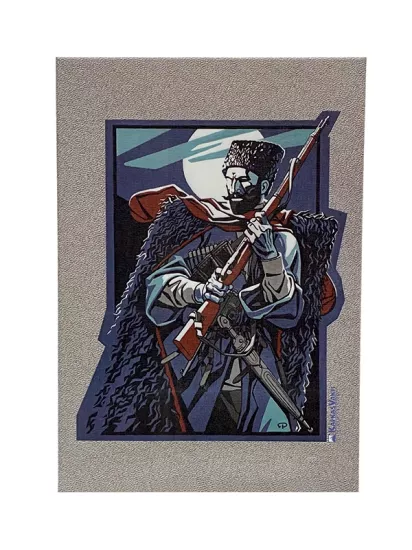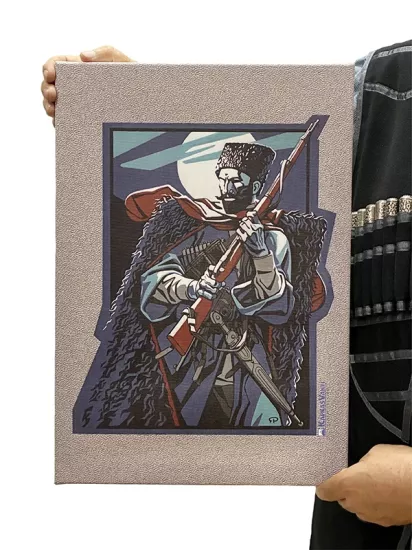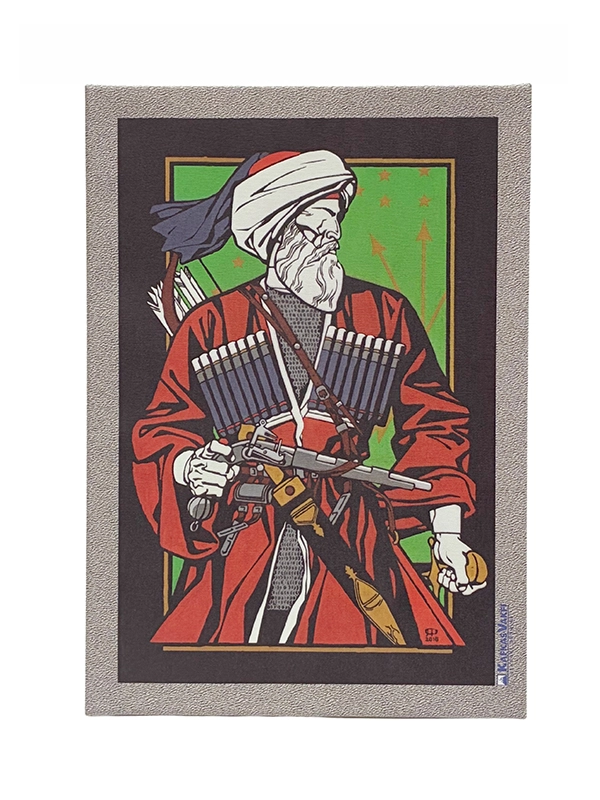
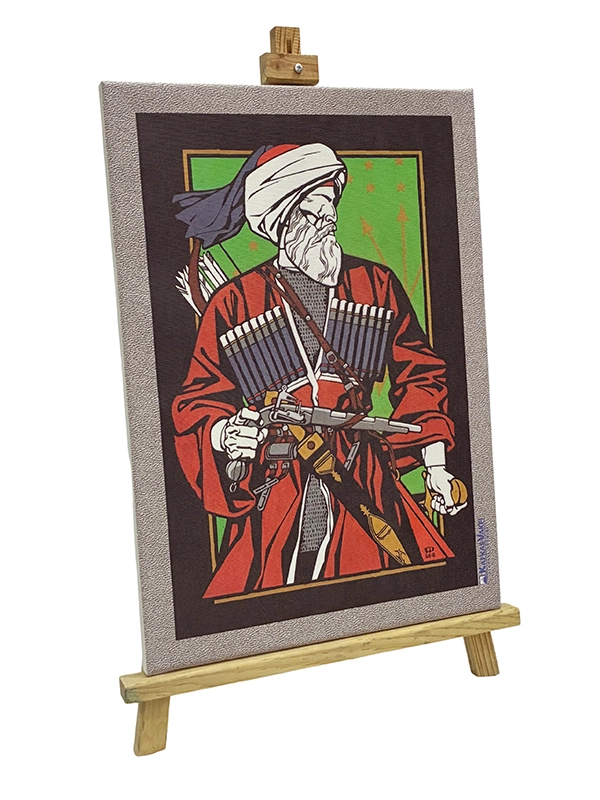
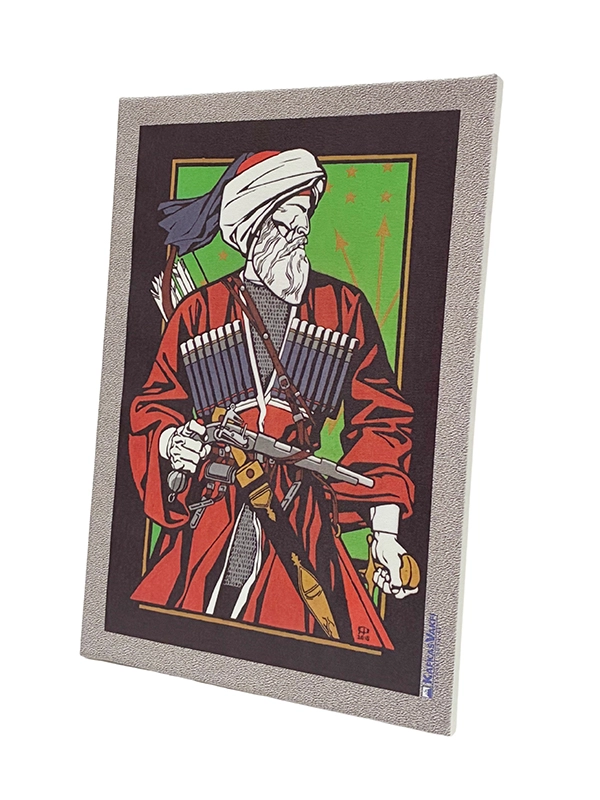
Size: 35 cm x 50 cm
Printing Technique: High-Quality Print on Canvas
Frame: Natural Wood Stretcher Bars
Edge (Border) Thickness: 1.5 cm
Cleaning: Wipe with a slightly damp cloth, do not use chemicals.
License: Official Licensed Product by Caucasian Foundation
Artist: The artwork belongs to Chechen artist Rustem Yakhikhanov. Unauthorized copying and use is illegal.
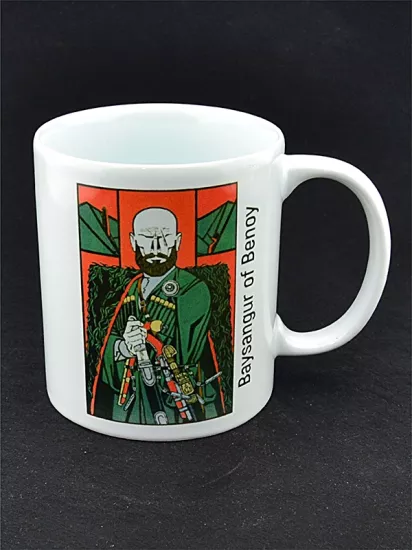
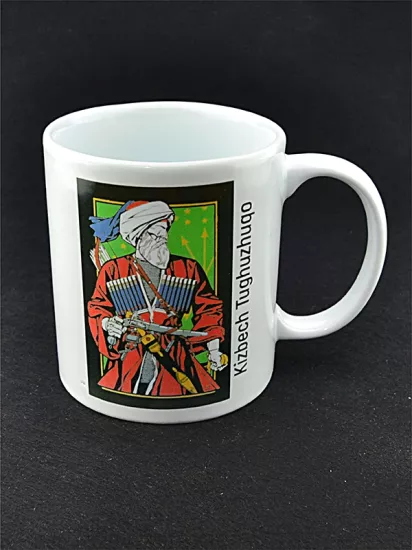
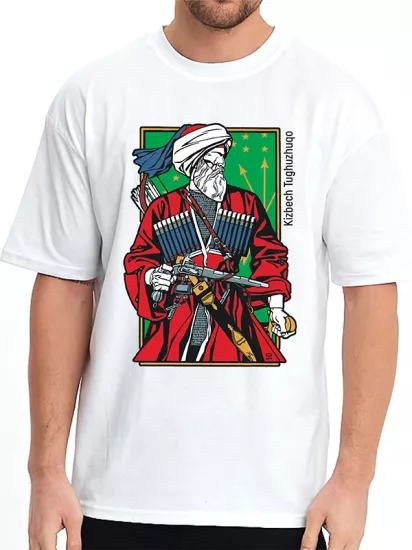
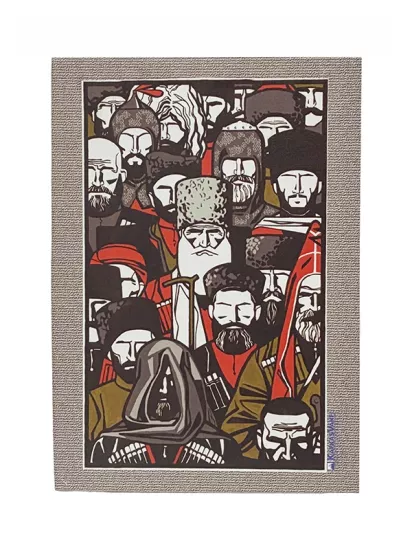
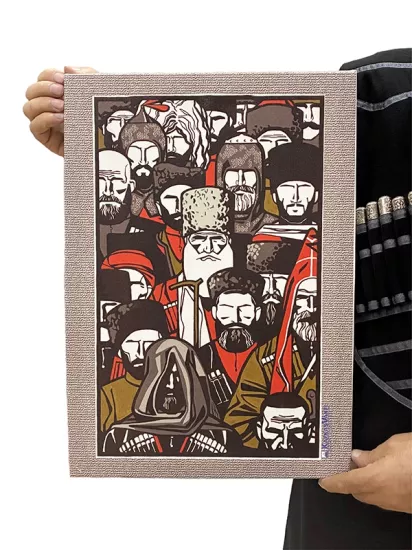
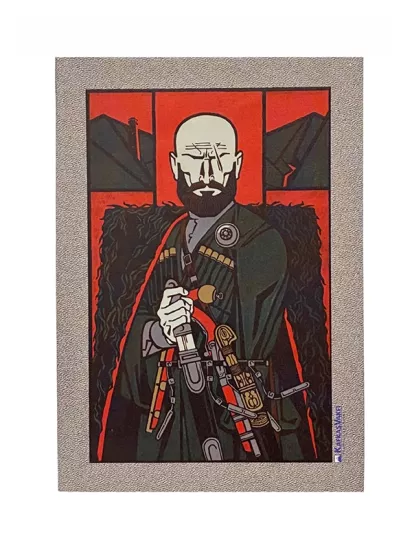
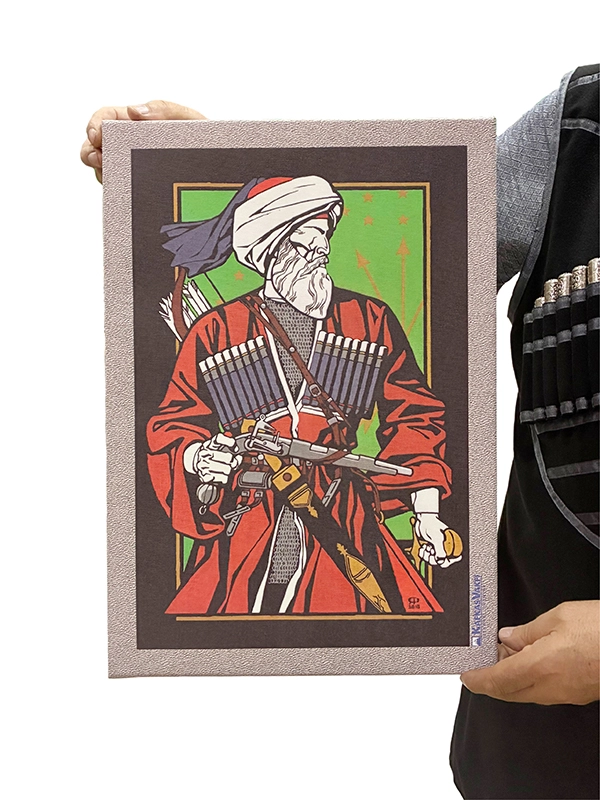
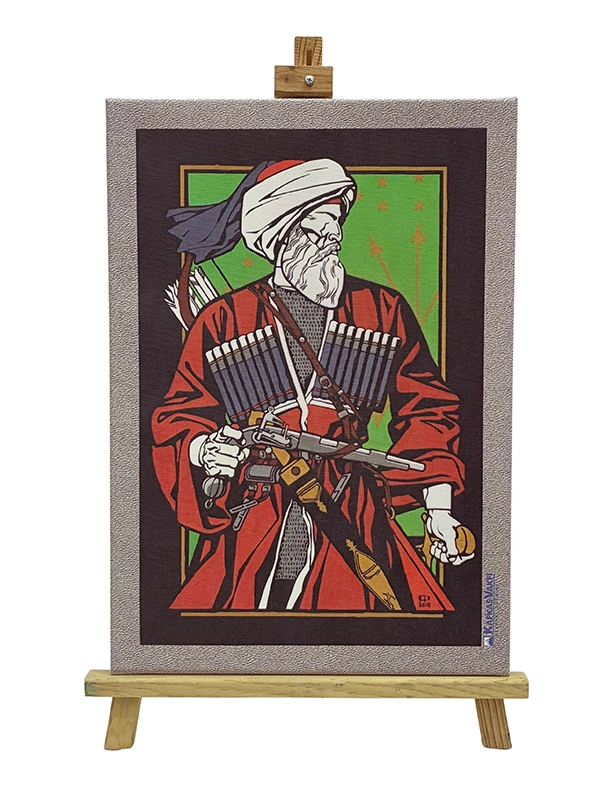
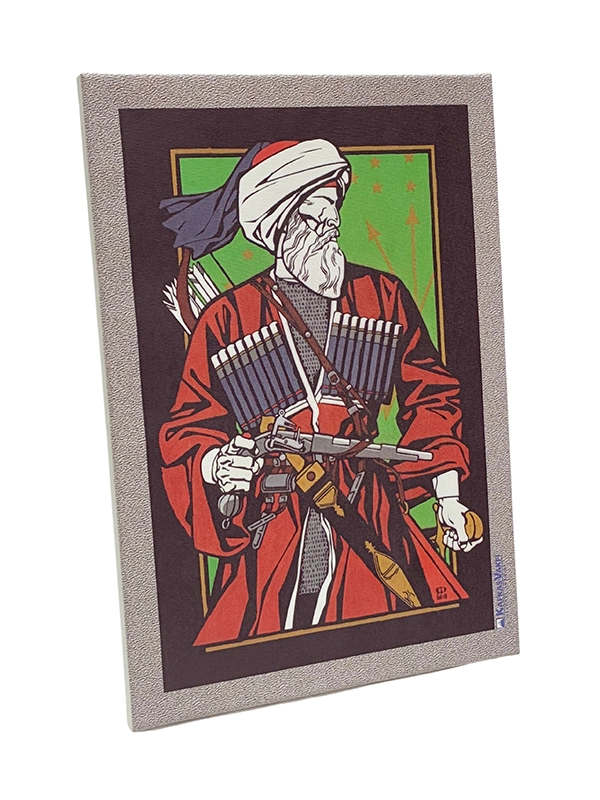
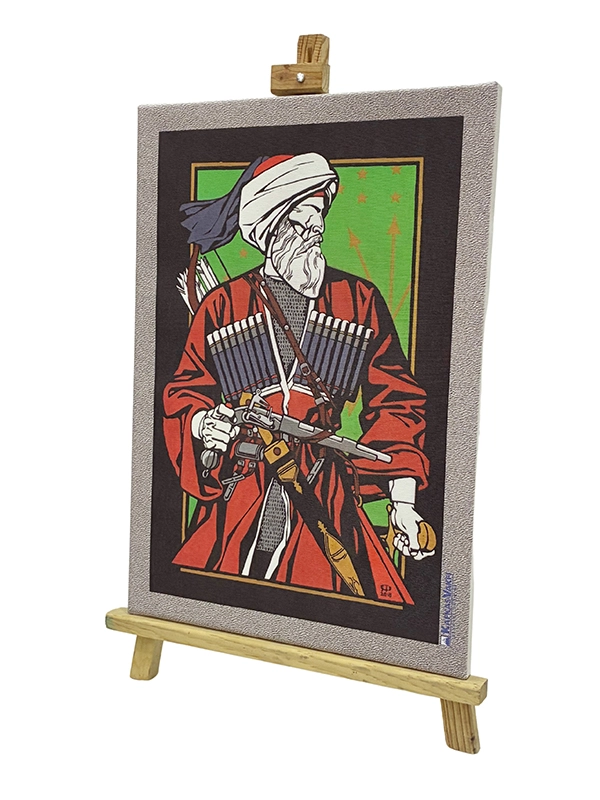
A licensed art piece that brings the historical texture of the Caucasus and its legendary heroic tales into your home. This special canvas painting is adorned with original graphics representing the legendary commander Kizbech Tughuzhuqo, known among the Circassian people as the "Lion of Circassia." Thanks to the high-quality printing technique, the colors are vibrant and the details are sharp. It can be preserved for many years without deformation thanks to the natural wood stretcher bars. It offers a sleek and modern look with a 1.5 cm edge thickness. Note: The easel shown in the photos is not included.
Who is Kizbech?
Kizbech Tughuzhuqo was born in 1777 in the village of Beannash. His military activity in Circassia coincided with the years 1810-1839. Due to his numerous victories in battles, he was known among the people by the nickname "Lion of Circassia."
In 1796, he participated in the Byzik battle where he almost lost his head and survived with a deep scar. There were battles where Kizbech emerged victorious against the Tsar's troops despite being outnumbered: for example, on one expedition, while leading 700 Shapsug cavalrymen, he dispersed a 14,000-strong Tsarist detachment.
During his attacks (raids), Kizbech used strategic techniques he developed himself, such as the feigned retreat tactic that the Cossacks called the "luring technique." When the Cossacks pursuing the mountaineers became separated from their own troops, the "Lion of Circassia" would attack them. Or another trick was to line up the riders like a "string." The rider would pretend to flee from his pursuers, drawing them into a line behind him, then suddenly stop his horse, turn around, and cut down the pursuers before they understood what was happening.
"A fleeing Circassian is still far from being a defeated warrior." As a warrior, Kizbech was highly respected among his opponents. Tsarist generals entered into negotiations with him and repeatedly offered him to switch to the service of the Russian Empire. However, the "Lion of Circassia" always scorned such offers.
Legends preserved in Adyghe folklore depict him as a model soldier fighting with fearlessness and relentless violence. Neither the death of his sons, nor the numerous wounds he received, nor old age could deprive Kizbech of his favorite trade - war. In his old age, he went to Mecca, but even the title of holy pilgrim could not calm the stubborn heart of the fierce rider within him; he remained an old-fashioned, stern Shapsug all his life. And despite being very old, he did not die of old age but from wounds received during an attack on the Veliaminov fortress on February 29, 1840.
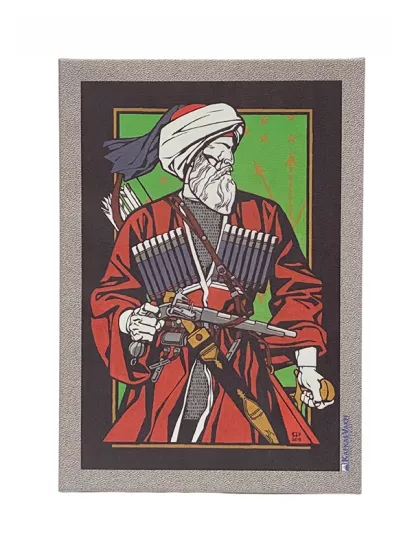
Size: 35 cm x 50 cm
Printing Technique: High-Quality Print on Canvas
Frame: Natural Wood Stretcher Bars
Edge (Border) Thickness: 1.5 cm
Cleaning: Wipe with a slightly damp cloth, do not use chemicals.
License: Official Licensed Product by Caucasian Foundation
Artist: The artwork belongs to Chechen artist Rustem Yakhikhanov. Unauthorized copying and use is illegal.
A licensed art piece that brings the historical texture of the Caucasus and its legendary heroic tales into your home. This special canvas painting is adorned with original graphics representing the legendary commander Kizbech Tughuzhuqo, known among the Circassian people as the "Lion of Circassia." Thanks to the high-quality printing technique, the colors are vibrant and the details are sharp. It can be preserved for many years without deformation thanks to the natural wood stretcher bars. It offers a sleek and modern look with a 1.5 cm edge thickness. Note: The easel shown in the photos is not included.
Who is Kizbech?
Kizbech Tughuzhuqo was born in 1777 in the village of Beannash. His military activity in Circassia coincided with the years 1810-1839. Due to his numerous victories in battles, he was known among the people by the nickname "Lion of Circassia."
In 1796, he participated in the Byzik battle where he almost lost his head and survived with a deep scar. There were battles where Kizbech emerged victorious against the Tsar's troops despite being outnumbered: for example, on one expedition, while leading 700 Shapsug cavalrymen, he dispersed a 14,000-strong Tsarist detachment.
During his attacks (raids), Kizbech used strategic techniques he developed himself, such as the feigned retreat tactic that the Cossacks called the "luring technique." When the Cossacks pursuing the mountaineers became separated from their own troops, the "Lion of Circassia" would attack them. Or another trick was to line up the riders like a "string." The rider would pretend to flee from his pursuers, drawing them into a line behind him, then suddenly stop his horse, turn around, and cut down the pursuers before they understood what was happening.
"A fleeing Circassian is still far from being a defeated warrior." As a warrior, Kizbech was highly respected among his opponents. Tsarist generals entered into negotiations with him and repeatedly offered him to switch to the service of the Russian Empire. However, the "Lion of Circassia" always scorned such offers.
Legends preserved in Adyghe folklore depict him as a model soldier fighting with fearlessness and relentless violence. Neither the death of his sons, nor the numerous wounds he received, nor old age could deprive Kizbech of his favorite trade - war. In his old age, he went to Mecca, but even the title of holy pilgrim could not calm the stubborn heart of the fierce rider within him; he remained an old-fashioned, stern Shapsug all his life. And despite being very old, he did not die of old age but from wounds received during an attack on the Veliaminov fortress on February 29, 1840.


 0212 671 79 80
 Türkçe
 English
 русский