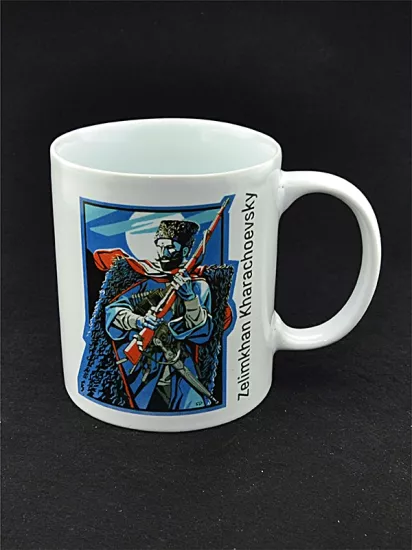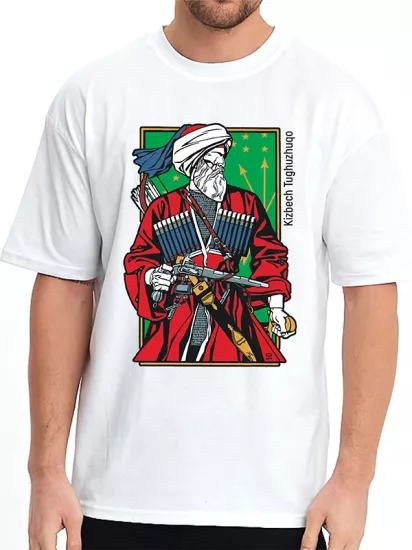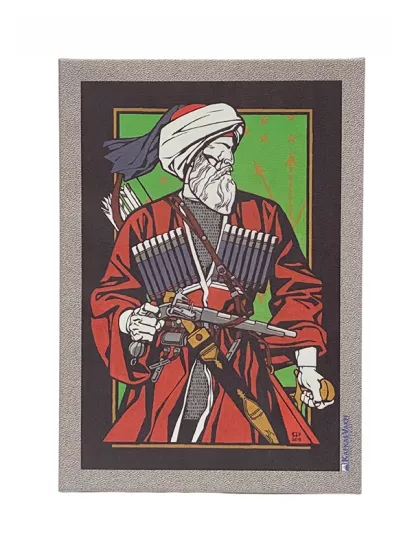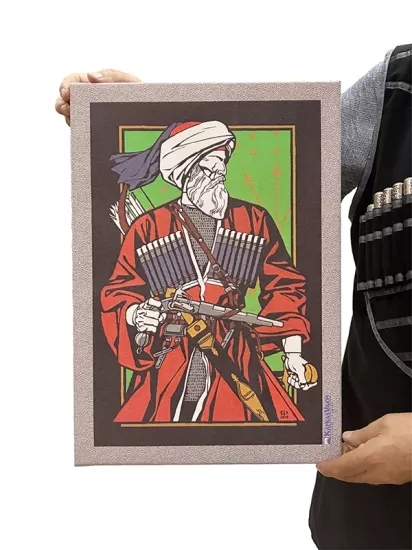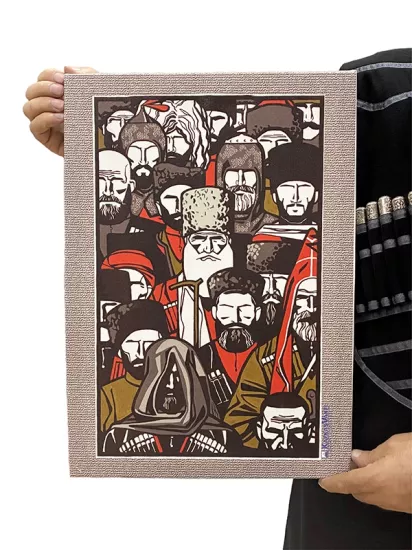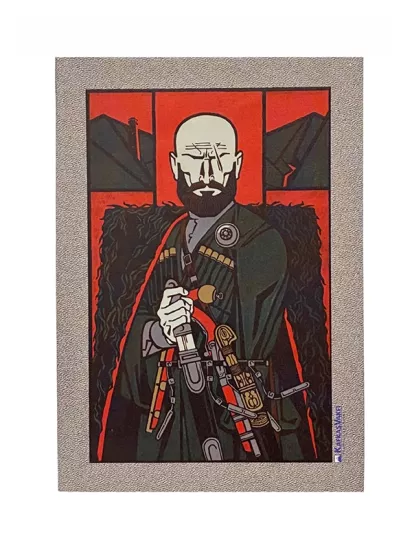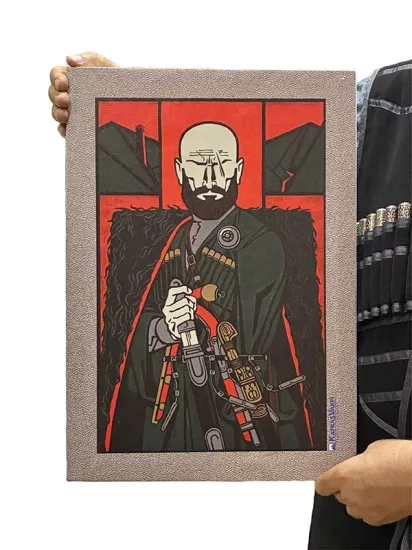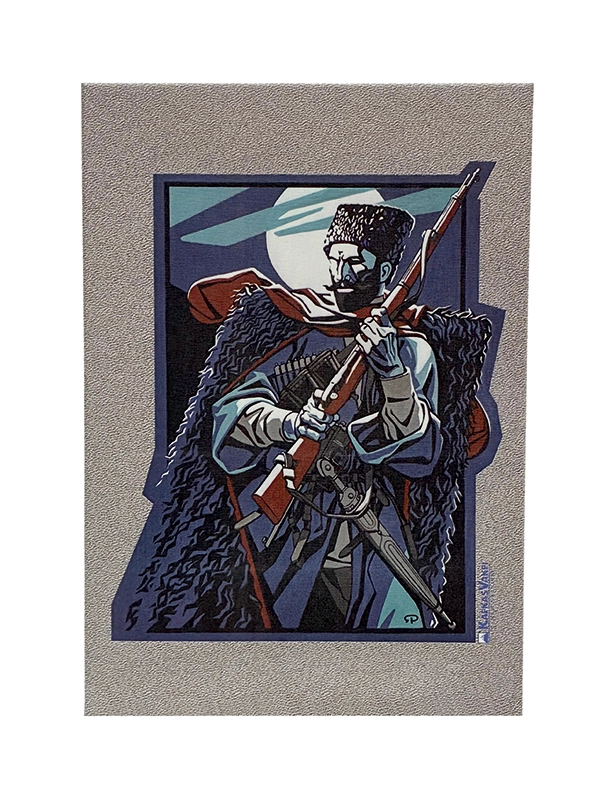
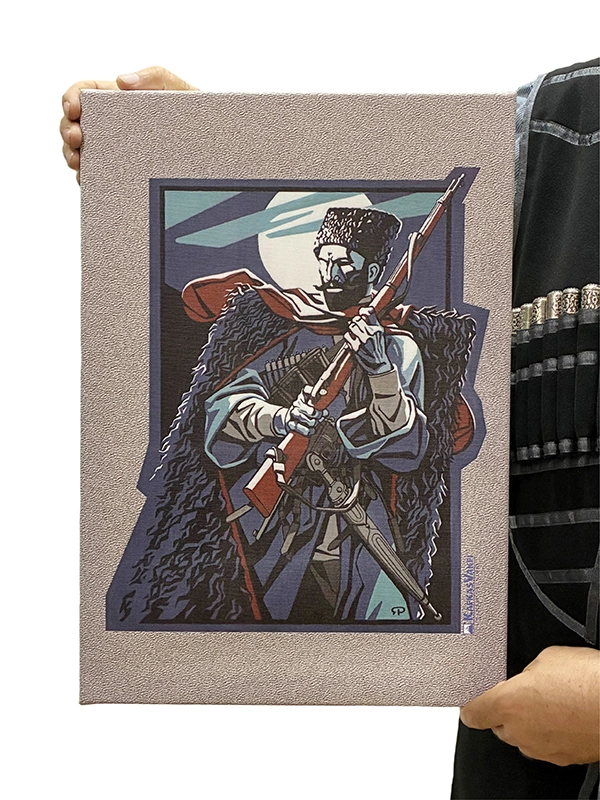
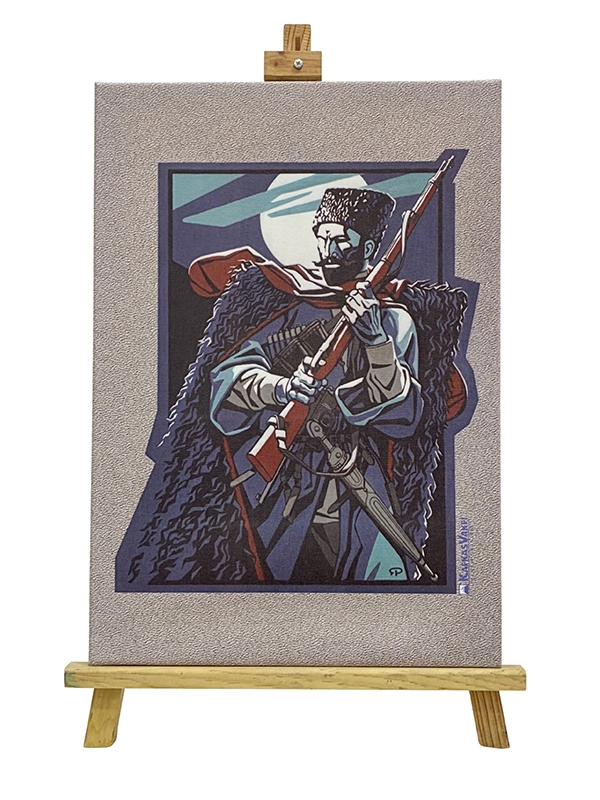
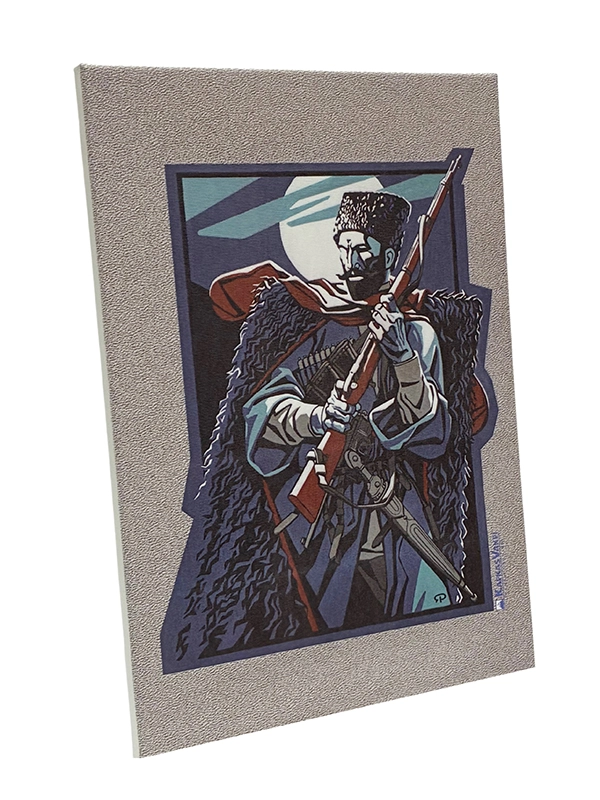
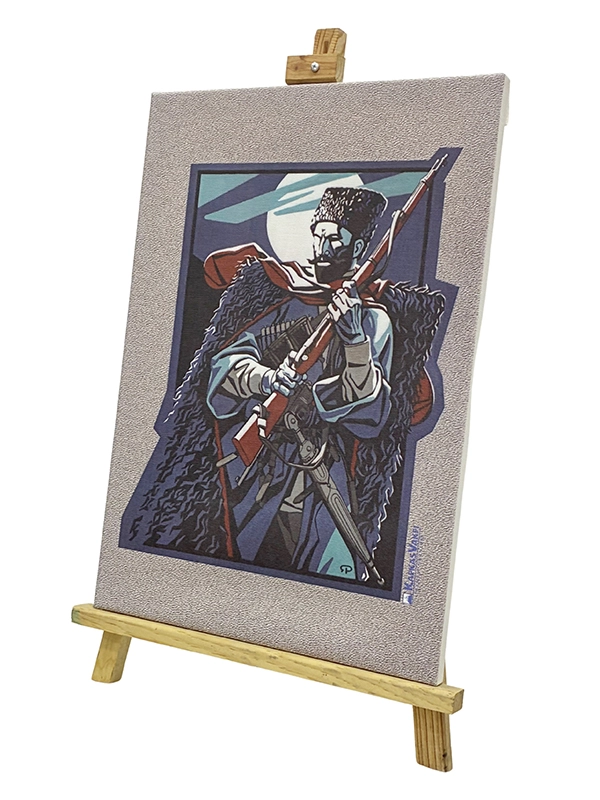
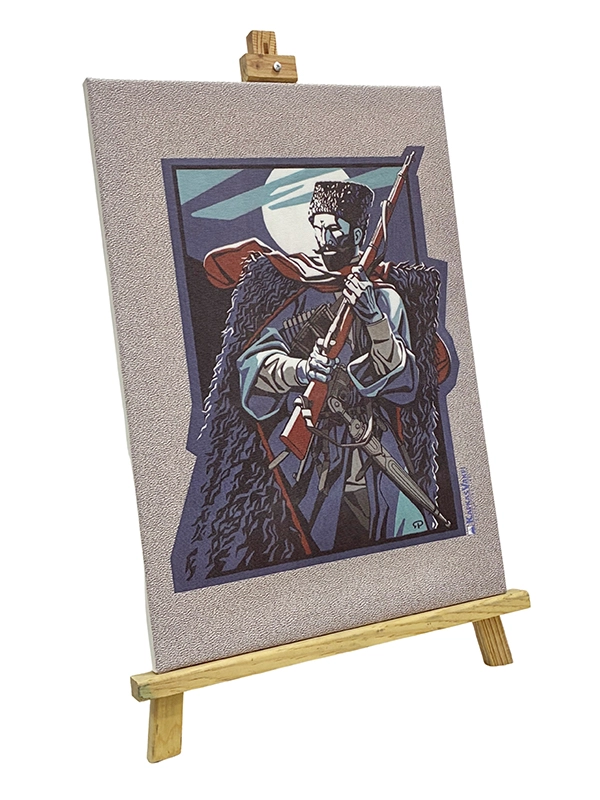
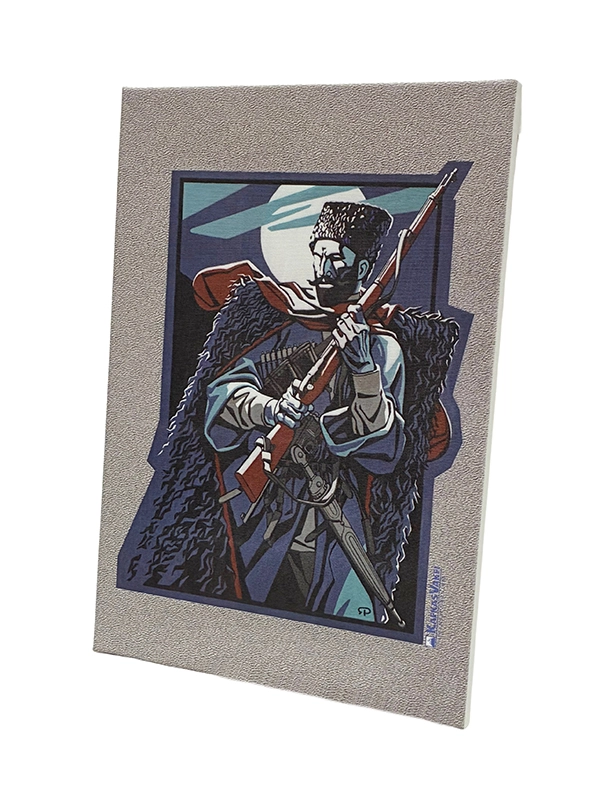
This canvas painting depicts the legendary Caucasian folk hero Zelimkhan. It is a licensed product by the Caucasian Foundation and features a special design by Chechen artist Rustem Yahikhanov. A distinguished collection piece both for its meaning and high quality, this work is more than a decorative object; it is a symbol of history and heroism, representing respect for Caucasian culture and history.
Technical Details: (Same as above, translated)
Size: 35 cm x 50 cm
Printing Technique: High-resolution, quality digital print on canvas.
Stretcher Frame: Natural, high-quality wood stretcher.
Edge (Wrap): 1.5 cm deep edge.
License: Officially licensed product by the Caucasian Foundation.
Cleaning: Wipe with a slightly damp cloth. Do not use chemical cleaners.
Note: The easel shown in the photos is not included.
Copyright Notice:
All graphics and designs on the work belong to the Chechen artist Rustem Yahikhanov. Unauthorized copying, reproduction, or use is illegal.
Who is Zelimkhan?
Zelimkhan Gushmazukayev from Karachay was one of the most famous, last Chechen abreks of the pre-revolution period. Zelimkhan was known as the "Governor of the Mountains" due to his successful operations against the Tsarist Russian administration for over 13 years.
Zelimkhan came from a wealthy family. By 1901, he was already a family man, and a destiny of becoming an abrek was far from his mind. However, a confrontation with youths from rival families and an unexpected clash led to the death of Zelimkhan's relatives. Zelimkhan responded to these events with a blood feud. As a result, he was brought before the court to be tried for murder under the laws of the Russian Empire. In 1901, the 27-year-old convicted Zelimkhan escaped and began his fight, thus completely ending any possibility of a peaceful life for himself.
The Tsarist administration placed a large bounty on Zelimkhan's head, which increased exponentially over the 13 years he evaded the authorities. Chechen villages that sheltered the fugitive abrek were fined, and some were even raided as punishment; yet, no villager ever surrendered him to the state officials.
During his time as an abrek, Zelimkhan and his fidais engaged in many clashes. They avenged killed highlanders, committed bank robberies, looted treasures and wealth, and distributed them to the poor.
Having lost most of his unit over time, Zelimkhan retreated to the mountains. In 1913, the authorities learned of his hiding place. When the house he was staying in was surrounded by soldiers in the town of Shali, he engaged in an unfair fight. Although Zelimkhan fought for a long time against the army brought by the traitor who betrayed him, he was shot and killed at dawn on September 27.
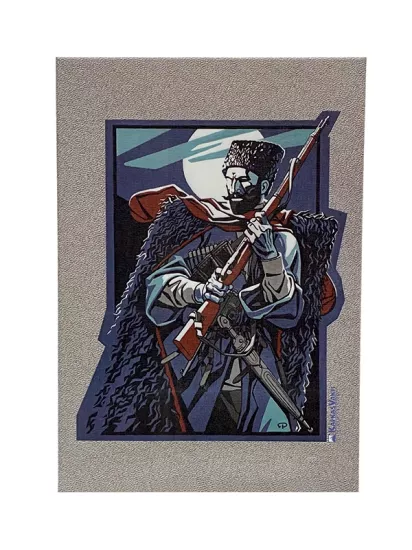
This canvas painting depicts the legendary Caucasian folk hero Zelimkhan. It is a licensed product by the Caucasian Foundation and features a special design by Chechen artist Rustem Yahikhanov. A distinguished collection piece both for its meaning and high quality, this work is more than a decorative object; it is a symbol of history and heroism, representing respect for Caucasian culture and history.
Technical Details: (Same as above, translated)
Size: 35 cm x 50 cm
Printing Technique: High-resolution, quality digital print on canvas.
Stretcher Frame: Natural, high-quality wood stretcher.
Edge (Wrap): 1.5 cm deep edge.
License: Officially licensed product by the Caucasian Foundation.
Cleaning: Wipe with a slightly damp cloth. Do not use chemical cleaners.
Note: The easel shown in the photos is not included.
Copyright Notice:
All graphics and designs on the work belong to the Chechen artist Rustem Yahikhanov. Unauthorized copying, reproduction, or use is illegal.
Who is Zelimkhan?
Zelimkhan Gushmazukayev from Karachay was one of the most famous, last Chechen abreks of the pre-revolution period. Zelimkhan was known as the "Governor of the Mountains" due to his successful operations against the Tsarist Russian administration for over 13 years.
Zelimkhan came from a wealthy family. By 1901, he was already a family man, and a destiny of becoming an abrek was far from his mind. However, a confrontation with youths from rival families and an unexpected clash led to the death of Zelimkhan's relatives. Zelimkhan responded to these events with a blood feud. As a result, he was brought before the court to be tried for murder under the laws of the Russian Empire. In 1901, the 27-year-old convicted Zelimkhan escaped and began his fight, thus completely ending any possibility of a peaceful life for himself.
The Tsarist administration placed a large bounty on Zelimkhan's head, which increased exponentially over the 13 years he evaded the authorities. Chechen villages that sheltered the fugitive abrek were fined, and some were even raided as punishment; yet, no villager ever surrendered him to the state officials.
During his time as an abrek, Zelimkhan and his fidais engaged in many clashes. They avenged killed highlanders, committed bank robberies, looted treasures and wealth, and distributed them to the poor.
Having lost most of his unit over time, Zelimkhan retreated to the mountains. In 1913, the authorities learned of his hiding place. When the house he was staying in was surrounded by soldiers in the town of Shali, he engaged in an unfair fight. Although Zelimkhan fought for a long time against the army brought by the traitor who betrayed him, he was shot and killed at dawn on September 27.


 0212 671 79 80
 Türkçe
 English
 русский